How to Plan a Faculty-Led Program in Morocco: A Step-by-Step Guide for Faculty
 By Yassine Echcherki, M.S. · November 2026
Morocco is one of the most rewarding destinations for a faculty-led program. In a single short-term course, students can walk through medieval medinas, sit in on lectures in Rabat, talk with entrepreneurs and artisans, and spend a night in the Sahara. This guide walks you through how to plan a program in Morocco from first idea to departure.
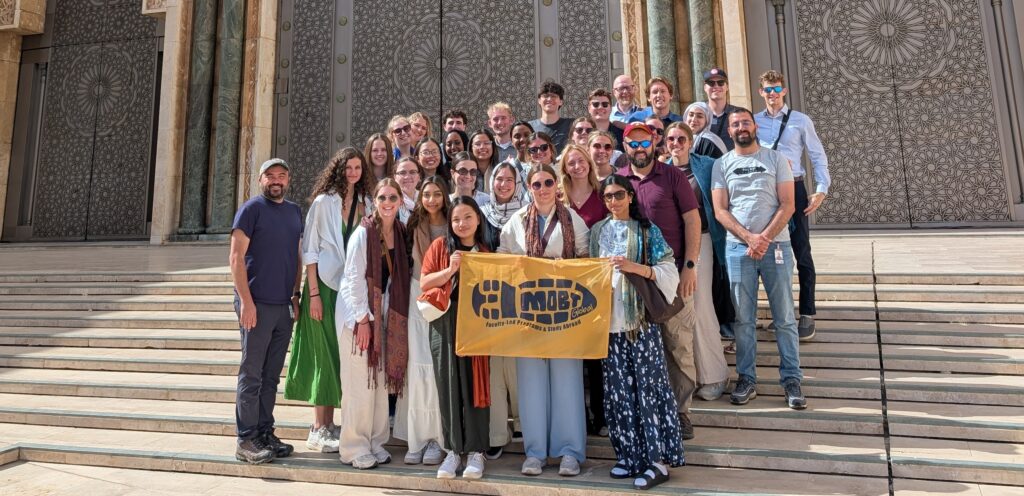
Why Morocco works for faculty-led programs
Morocco sits at the crossroads of Africa, Europe and the Arab world. Arabic, Amazigh (Berber) and French are part of daily life, and Islam, Judaism and Christianity all have deep roots in the country. For students, that mix turns almost any course into a lesson in comparison.
- Easy entry for U.S. students. U.S. citizens do not need a visa for tourist stays of up to 90 days, which covers almost every short-term program.
- Short travel from the U.S. There are direct flights from the East Coast to Casablanca, and Europe is a short flight or ferry ride away.
- Strong academic partners. Universities and business schools in Rabat, Fes and beyond can host lectures, student exchanges and site visits.
- Real value for students. Lodging, meals and local transport typically cost less than in Western Europe, which keeps programs accessible.
1Start with your learning outcomes
The strongest programs begin with the syllabus, not with a list of places. Write down three or four learning outcomes, then build the program around experiences that serve them. Morocco fits a wide range of disciplines:
| Discipline | What students can explore |
|---|---|
| Religion and philosophy | Islam as a majority faith, and Judaism and Christianity as minority faiths in the same society |
| Business and entrepreneurship | Cooperatives, artisan economies, family businesses and Morocco’s growing industries |
| Political science and international relations | Constitutional monarchy, Africa and EU relations, migration |
| Public health and social work | Community health, women’s cooperatives and NGOs |
| Language and communication | Arabic, French and intercultural communication in a multilingual society |
| Environment and sustainability | Water management, renewable energy and desert ecosystems |
| Art, history and architecture | Medinas, Andalusian heritage, traditional crafts and design |
Not sure your course is a fit? Our Course Finder matches disciplines to destinations.
2Choose where to base your program
It is tempting to fit every famous city into one program. In our experience, students learn more when they stay longer in fewer places. Changing hotels every night or two leaves students tired and leaves little time to reflect. (We explore this in our editorial on designing programs for depth over breadth.)
For a 10 to 14 day program, two bases usually work best:
- Rabat: the capital, calm and walkable, with universities, government institutions and easy day trips. An ideal academic base.
- Fes: home to one of the world’s oldest universities and a car-free medina, perfect for history, religion and craft.
- Chefchaouen: a small mountain town in the north, good for reflection days and community visits.
- Marrakech and the Sahara: high-energy cities and an overnight in the desert, best kept as a shorter final chapter.
The goal is not to see more places. The goal is to understand the places you see.
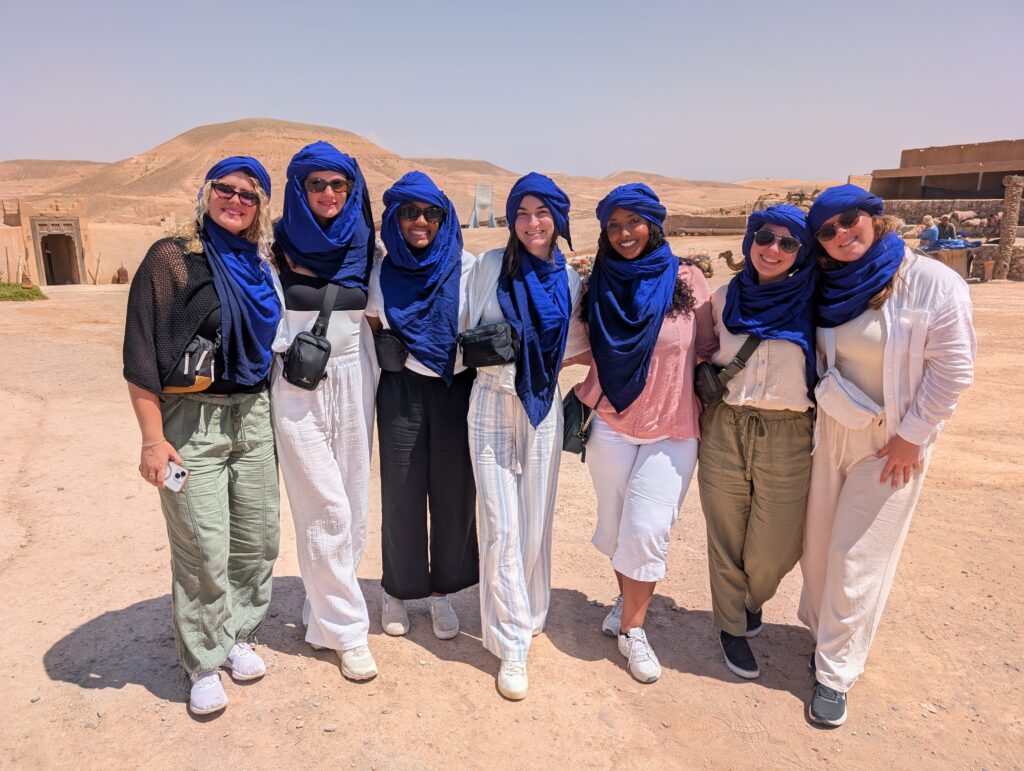
Want two countries? Morocco pairs naturally with Spain across the Strait of Gibraltar. Students can compare two cultures that share centuries of history. Learn more about dual-country programs.
3Follow a realistic planning timeline
| When | What to do |
|---|---|
| 12 to 9 months before | Define learning outcomes, talk with your study abroad office, and submit an RFP to get a custom proposal. |
| 9 to 7 months before | Refine the program and pricing, get institutional approval, and consider a site visit. Our Global Engagement Grant helps faculty visit first. |
| 7 to 4 months before | Recruit students with info sessions and promotional materials, and open applications. |
| 4 to 2 months before | Confirm the group, collect deposits, book flights, and enroll everyone in travel insurance. |
| Last 6 weeks | Hold pre-departure orientation, share packing and cultural guidance, and register the group in the State Department’s STEP program. |
4Understand pricing and what is included
Cost is often the biggest question for faculty and students. A good partner gives you clear pricing with appropriate tiers for your expected student numbers, so you know what the program costs whether 10 or 25 students enroll.
A faculty-led program in Morocco with MOBT Global typically includes:
- Accommodation in safe, centrally located hotels or riads
- All in-country transportation, including airport transfers
- Lectures, guided visits, workshops and site visits tied to your course
- Many meals, including group dinners that are part of the learning
- A dedicated Program Leader and Program Assistant who travel with the group
- Support around the clock from our own local team
International airfare and travel insurance are usually arranged separately, which gives students and institutions flexibility.
5Plan for health, safety and support
Safety is the first question study abroad offices ask, and it should be. Morocco is a popular, welcoming destination, but like any country it requires preparation. The U.S. Department of State currently rates Morocco at Level 2, “Exercise increased caution,” the same level as many popular European destinations. Always review the current advisory before you travel.
- On-site staff at all times. Every MOBT Global program has a Program Leader and a Program Assistant with the group.
- Trained teams. Our staff complete our Emergency Preparedness and Response certification.
- Clear plans. Emergency contacts, nearby hospitals and response steps are shared with faculty before departure.
- Practical health tips. Students should drink bottled water, carry any prescriptions in original packaging, and get travel insurance with medical coverage.
6Prepare students for the culture
A short orientation before departure makes a big difference in how students experience Morocco.
- Dress: clothing that covers shoulders and knees is respectful and practical, especially at religious sites and in smaller towns.
- Ramadan: if your program falls during Ramadan (expected roughly from early February to early March in 2027), students will see a special rhythm of daily life. It is a powerful learning opportunity, and we adjust schedules around it.
- Language: a few words of Darija (Moroccan Arabic) or French go a long way. “Salam” (hello) and “shukran” (thank you) open many doors.
- Photos and bargaining: ask before photographing people, and treat bargaining in the souks as a friendly conversation rather than a contest.
Frequently asked questions
How long should a faculty-led program in Morocco be?
Most programs run 10 to 21 days. Shorter programs work well over spring break or in May, and longer summer programs allow time for service learning or language study.
What is the best time of year to go?
Spring (March to May) and fall (September to November) have the most comfortable weather. Summer is hot inland but pleasant on the coast. Winter is mild in Rabat and cold in the mountains and desert at night.
How many students do we need?
Programs can run with small groups, and per-student pricing improves as the group grows. We build clear pricing tiers around your expected enrollment.
Do students need to speak Arabic or French?
No. Lectures and visits are arranged in English, and our team translates whenever needed.
Can we combine Morocco with another country?
Yes. Spain and Portugal pair especially well with Morocco, and the ferry across the Strait of Gibraltar is part of the experience.
Ready to plan your program in Morocco?
Tell us about your course, dates and expected group size. Our own local team in Morocco will design a program around your learning outcomes, at no cost to you.
Submit a Free RFPSee our Morocco programs