From Classroom to Factory Floor: A Conversation with Liberty Perfumes on Hosting American College Students
When a faculty-led program brings students onto a working factory floor, something happens that a lecture hall simply cannot replicate. Textbook concepts like supply chain logistics, production capacity, and quality control stop being abstractions and start being machines, people, and processes moving in real time.
That was the experience of a few of our recent groups who visited Liberty Perfumes, a fragrance and cosmetics manufacturer, as part of their faculty-led program abroad. We sat down with Ismail Tamimi, the Executive Director of Liberty Perfumes, to hear how the visit unfolded from the host’s side of the table.
“The students’ curiosity and polite engagement created a positive atmosphere throughout the plant.”
Connecting Theory to the Factory Floor
From your perspective, how well did the students grasp the transition from academic theory into your real-world business workflows?
During the visits, we observed that the students were able to connect their academic theories to our day to day manufacturing activities. Observing the transition from raw materials in our stock to finished perfume bottles helped ground their theoretical knowledge in practical realities. For instance, seeing the automated air freshener filling machines in action provided a clear example of production line efficiency and capacity management, which they had likely only studied in textbooks. Furthermore, observing the laboratory team blend fragrances highlighted the strict quality control protocols required in cosmetic manufacturing. The students asked relevant questions about workflow organization and fulfillment services for our brand partners, demonstrating a solid effort to bridge the gap between classroom concepts and active industrial operations.
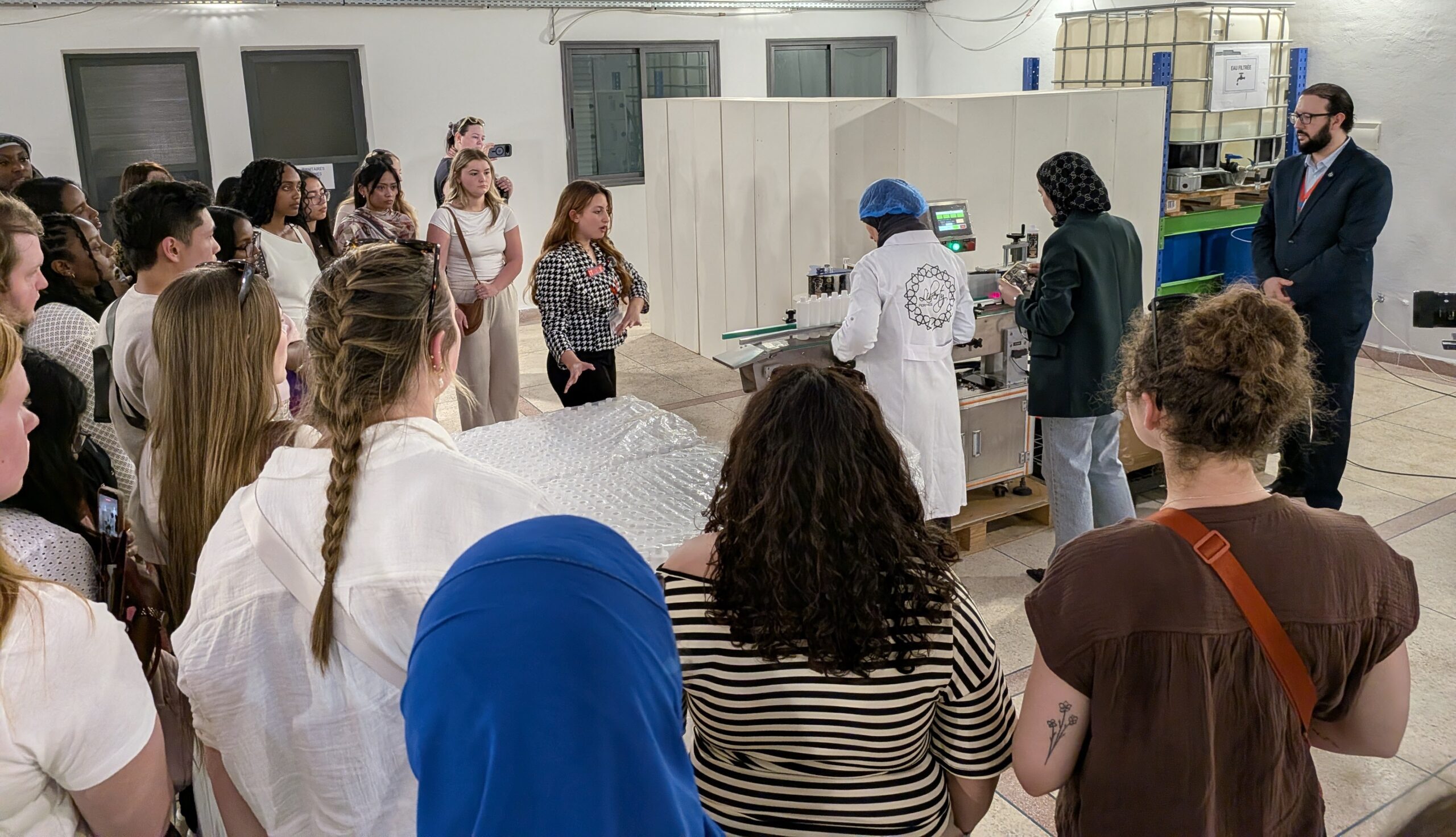
Students from the University of Minnesota touring the Liberty Perfumes production floor.
What the Team Enjoyed Most
What did you and your team enjoy the most about hosting our visiting group of American college students?
Our team thoroughly enjoyed the opportunity to share our passion and daily craftsmanship with an international audience. It was rewarding for our operational staff, who are usually focused on production targets, to step back and explain the complexities of fragrance formulation and packaging to curious minds. We particularly enjoyed guiding them through the different departments, from the laboratory to the final packaging stage. The students’ curiosity and polite engagement created a positive atmosphere throughout the plant. Seeing their interest in how we manage fulfillment for different brand owners gave our team a renewed sense of pride in their work, making the hosting experience a very positive memory for everyone involved.
Unexpected Questions from Diverse Majors
Our students come from diverse fields of study, ranging from business and technology to engineering and humanities. Did you notice any interesting or unexpected questions from the students that stood out to your operational team?
Given the diverse academic backgrounds of the students, our operational team received a wide range of questions that we do not typically encounter during standard business to business visits. For example, students with engineering backgrounds focused closely on the mechanics and maintenance of our automated filling machines. Meanwhile, those studying business and humanities asked insightful questions regarding the ethical sourcing of fragrance ingredients and the logistics of our supply chain. We also discussed how we manage brand identity and quality standards when executing fulfillment for various external brand owners. This variety of perspectives was highly engaging for our staff, as it forced us to think about our operations from different analytical angles.
Engineering Minds
Focused on the mechanics, maintenance, and efficiency of the automated filling machines running the production line.
Business & Humanities Minds
Asked about ethical ingredient sourcing, supply chain logistics, and how brand identity is preserved across fulfillment partners.
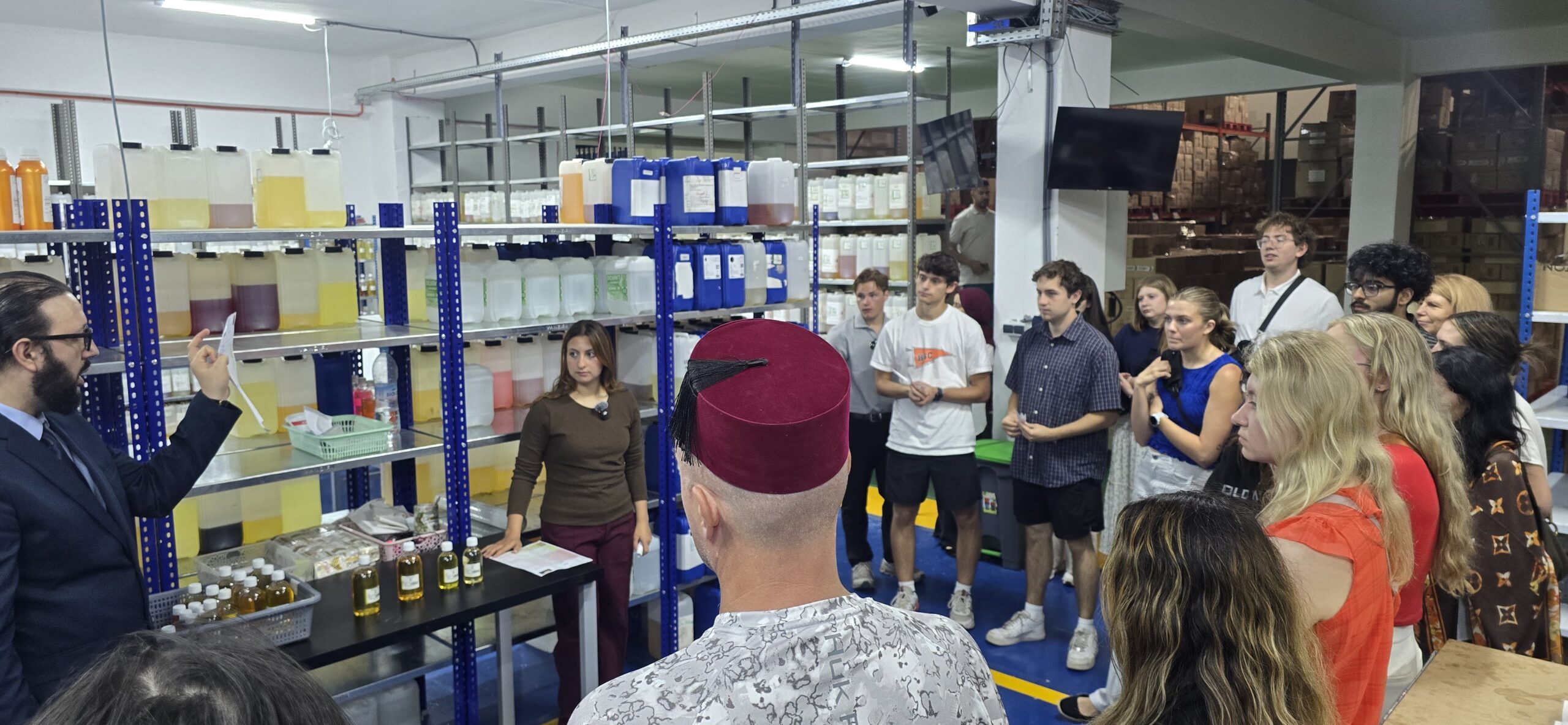
Students from Oklahoma State University visiting Liberty Perfumes.
Aligning with a Broader Mission
How does opening your doors to international educational cohorts align with your organization’s broader mission regarding community engagement, global education, and showcasing your regional industry to the world?
Welcoming international student groups aligns with our commitment to transparency, education, and community engagement. At Liberty Perfumes, we believe that sharing industry knowledge is vital for fostering the next generation of global business leaders. By opening our doors, we are able to showcase our region’s manufacturing capabilities and the unique standards of our local fragrance industry to an international audience. This initiative supports a broader dialogue on global trade and manufacturing standards. It also allows our organization to contribute to global education in a practical way, showing that local industries play a significant role in the global supply chain and economy.
Sharing industry knowledge is vital for fostering the next generation of global business leaders.
Why Cross-Border Dialogue Matters
A major goal of our programs is creating a mutual dialogue, comparing how business operations, marketing, or supply chains work in the US versus your local market. Why do you believe this kind of cross-border exchange is so critical in today’s global marketplace?
In today’s interconnected economy, cross-border exchanges are essential because they challenge students and professionals alike to look beyond their local paradigms. During our discussions, comparing the logistical, regulatory, and marketing landscapes of the US with our local market highlighted how business strategies must adapt to regional realities. Understanding these differences is crucial for anyone aspiring to work in international business or supply chain management. These dialogues help break down assumptions about standardized global processes and teach students that successful operations rely on understanding local consumer behavior, regional regulations, and localized supply chains, ultimately preparing them for more effective international collaboration.
Advice for Faculty Before a Visit
From a host organization’s perspective, what can university faculty members do before the program begins to ensure their students arrive thoroughly prepared to engage deeply with a company like yours?
To optimize the experience, faculty members can introduce students to the basics of the cosmetics and contract manufacturing industry prior to the visit. A brief overview of supply chain terminology, such as “fulfillment,” “raw material inventory,” and “automated production,” would give students a helpful baseline. We also suggest encouraging students to research general regulatory differences in cosmetic manufacturing between the US and our region beforehand. Having them prepare two or three targeted questions related to their specific majors, whether in marketing, engineering, or business operations, ensures they can engage more deeply with our team and get the most value out of their time on the factory floor.
01
Build a Baseline
Introduce students to core terms like fulfillment, raw material inventory, and automated production before arrival.
02
Research Regulations
Encourage students to look into how cosmetic manufacturing regulations differ between the US and the host region.
03
Prepare Targeted Questions
Have students draft two or three questions tied to their own major so the visit speaks directly to their interests.
From the factory floor in stock rooms to the laboratory where fragrances are blended, this visit to Liberty Perfumes shows what happens when a classroom and a working business open their doors to each other. The result is not just a better understanding of manufacturing, but a small, real step toward the kind of global fluency that faculty-led programs are built to create.
Featured Guest